Projects
Empowering the Lake Region with Sickle Cell Solutions
Each project is designed for transparency, measurable outcomes, and scalable impact. Join us in protecting children and supporting families through screening, health systems strengthening, and community-led education.
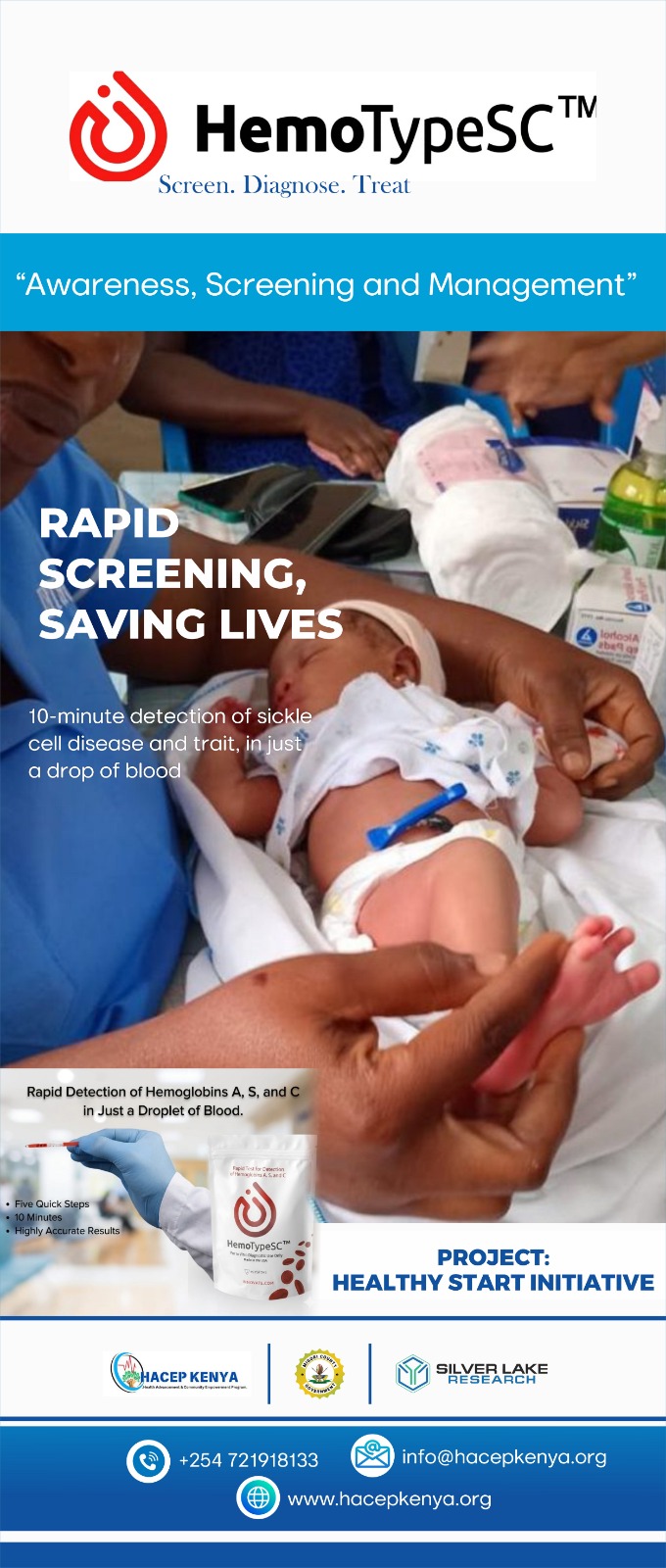
Healthy Start Initiative Sickle Cell Screening and Management Project
HACEP Kenya, in partnership with Sickle Forward and Silverlake Research, is implementing the Healthy Start
Initiative Sickle Cell Screening and Management Project across the Lake Region of Kenya. This
collaborative effort addresses the high prevalence of Sickle Cell Disease (SCD) in the region,
providing comprehensive screening, early diagnosis, and effective management for affected children.
The Healthy Start Initiative is a flagship program by HACEP Kenya dedicated to transforming the
landscape of early diagnosis and care for children with SCD. Rooted in the belief that every child
deserves a healthy beginning, the initiative takes a comprehensive, system-wide approach to one of
Kenya's most underdiagnosed and life-threatening genetic conditions.
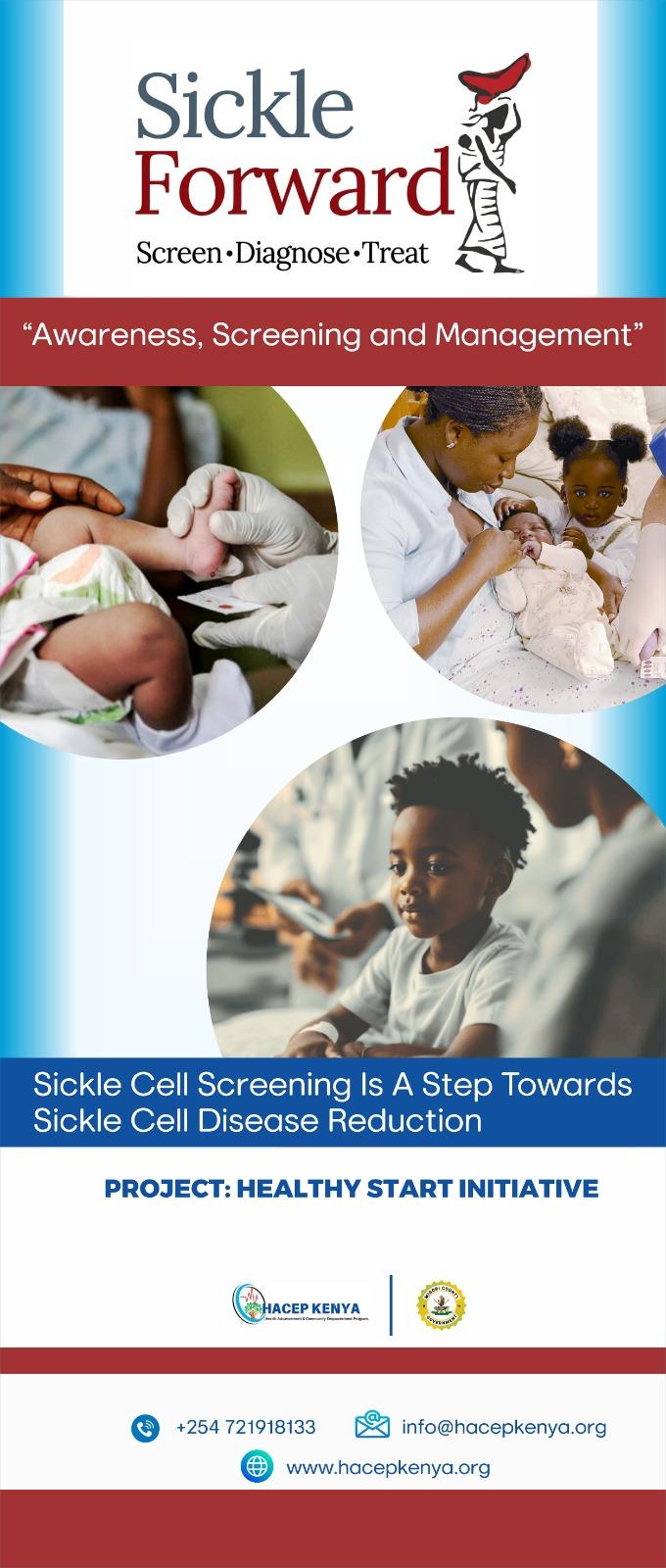
At the heart of the program is the integration of routine newborn screening into public and private
health facilities. By embedding screening within existing maternal and child health services, babies
are tested within the first days of life often before symptoms appear. Early detection opens a critical
window for timely interventions, preventing severe complications, recurrent hospitalizations, and early
mortality.
Beyond diagnostics, the initiative emphasizes healthcare worker capacity building. Through targeted
training, mentorship, and provision of essential tools, nurses, clinicians, and laboratory personnel
are empowered to accurately diagnose, counsel families, and manage SCD using evidence-based protocols.
This strengthens the overall health system and ensures that quality care reaches not only major hospitals
but also lower-level facilities closer to communities.
The project also establishes clear and efficient referral pathways. Once a child is diagnosed, they are
seamlessly linked to specialized care, including prophylactic treatments, routine monitoring, and
emergency management. Families are supported throughout this journey, reducing delays in care and
improving long-term health outcomes.
Community engagement is a cornerstone of the initiative. Through awareness campaigns, community dialogues,
and partnerships with local leaders, the program works to dispel myths, reduce stigma, and encourage
families to seek early testing and care. Parents and caregivers are empowered with knowledge about SCD,
its symptoms, and preventive measures, fostering proactive health-seeking behaviors.
Operating in Migori, Homa Bay, and Kisumu Counties, the initiative aims to screen tens of thousands of
newborns annually. By strengthening partnerships with local health facilities and County Health
Management Teams (CHMTs), the project ensures that services are accessible, sustainable, and integrated
into the existing healthcare system.
Additionally, the initiative leverages data and digital health tools to track screening outcomes,
monitor patient progress, and inform decision-making. This data-driven approach not only improves
program efficiency but also contributes to national efforts in understanding and addressing the burden
of SCD.
Through this collaboration, HACEP Kenya, Sickle Forward, and Silverlake Research are working to reduce the burden
of Sickle Cell Disease, strengthen healthcare delivery, and empower communities. By combining early
detection, strong health systems, and informed communities, the initiative envisions a future where no
child dies from preventable complications of SCD ensuring that every child truly gets a healthy start to
life.
72,000+
Newborns screened annually
500+
Youths trained in health leadership
15
Facilities actively supported
3M+
Indirect community beneficiaries
Testimonials
Voices of beneficiaries, colleagues, and partners on HACEP Kenya's impact.
Our Partners
Trusted partnerships help us deliver stronger county systems, better referral pathways, and broader health impact.